
Introduction
Artificial Intelligence Technology Trends are shaping the way the modern world works. From smartphones and smart homes to healthcare and finance, intelligent systems are becoming part of everyday life. Many people hear about artificial intelligence but feel confused about what it really means and how fast it is growing. This guide is written to remove that confusion and explain everything in a clear and simple way.
Artificial Intelligence technology trends focus on how machines learn, think, and make decisions using data. These trends are not only for developers or large companies. Even beginners and small businesses are affected by these changes. Understanding these trends helps people prepare for new job roles, smarter tools, and better decision-making systems.
What is Artificial Intelligence Technology Trends?
Artificial Intelligence technology trends refer to the latest developments and directions in artificial intelligence systems. These trends show how AI tools are improving, spreading across industries, and becoming more human-like in their performance.
Artificial intelligence itself means creating machines that can think, learn, and solve problems like humans. When we talk about trends, we focus on how this technology is changing over time. This includes smarter algorithms, faster processing, and better use of data.
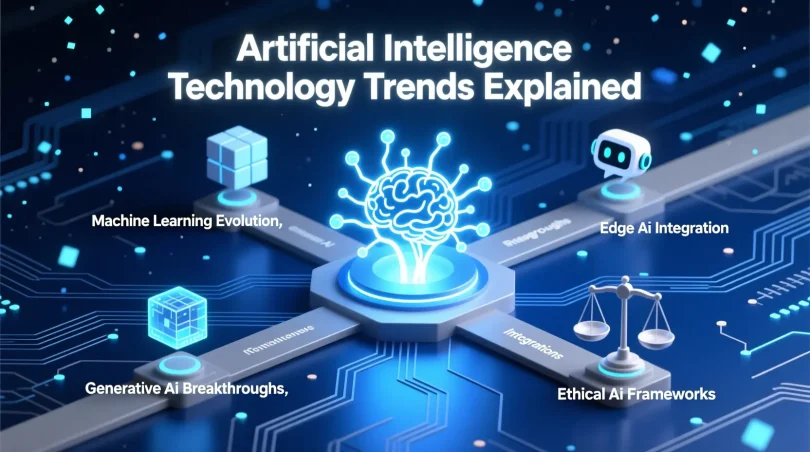
Some common examples of artificial intelligence technology trends include machine learning, natural language processing, computer vision, and automated decision systems. These technologies help machines understand language, recognize images, and predict outcomes based on data patterns.
Artificial intelligence technology trends also include ethical AI, responsible data usage, and human-centered design. As AI becomes more powerful, developers are focusing on making it safer and more transparent.
In simple terms, these trends show where artificial intelligence is going and how it is being used to solve real-world problems more efficiently.
Why is Artificial Intelligence Technology Trends Important?
Artificial Intelligence technology trends are important because they affect almost every industry. Businesses use AI to save time, reduce costs, and improve accuracy. Individuals benefit from smarter tools that make daily tasks easier.
One major reason these trends matter is productivity. AI systems can process large amounts of data faster than humans. This helps organizations make better decisions in less time.
Another important reason is innovation. Artificial intelligence technology trends enable new products and services. For example, virtual assistants, personalized learning platforms, and smart healthcare systems are all results of AI innovation.
These trends also influence job markets. While some traditional jobs may change, new roles related to AI development, management, and ethics are being created.
Finally, artificial intelligence technology trends play a role in solving global challenges. From climate prediction to disease detection, AI helps analyze complex problems and offer practical solutions.
Detailed Step-by-Step Guide
Step 1: Understanding Data Collection
Artificial intelligence systems start with data. Data can come from images, text, numbers, or user behavior. The quality of data directly affects AI performance.
Organizations collect data from websites, sensors, customer interactions, and digital records. Clean and organized data is essential for accurate results.
Step 2: Choosing the Right Algorithm
Algorithms are sets of rules that guide AI systems. Different artificial intelligence technology trends use different algorithms based on goals.
For example, machine learning algorithms learn from past data, while deep learning models handle complex patterns like speech and images.
Step 3: Training the AI Model
Training means feeding data into the algorithm so it can learn patterns. During this stage, the system makes predictions and adjusts itself based on errors.
Training may take hours or even weeks, depending on data size and complexity.
Step 4: Testing and Validation
After training, the AI model is tested using new data. This step checks accuracy and reliability.
Validation ensures the system works well in real-world situations and does not produce biased or incorrect results.
Step 5: Deployment and Integration
Once tested, the AI system is deployed into real applications. This could be a mobile app, website, or internal business system.
Integration ensures the AI works smoothly with existing tools and processes.
Step 6: Continuous Improvement
Artificial intelligence technology trends emphasize continuous learning. AI systems improve over time as they receive new data.
Regular updates and monitoring help maintain performance and security.
Benefits of Artificial Intelligence Technology Trends
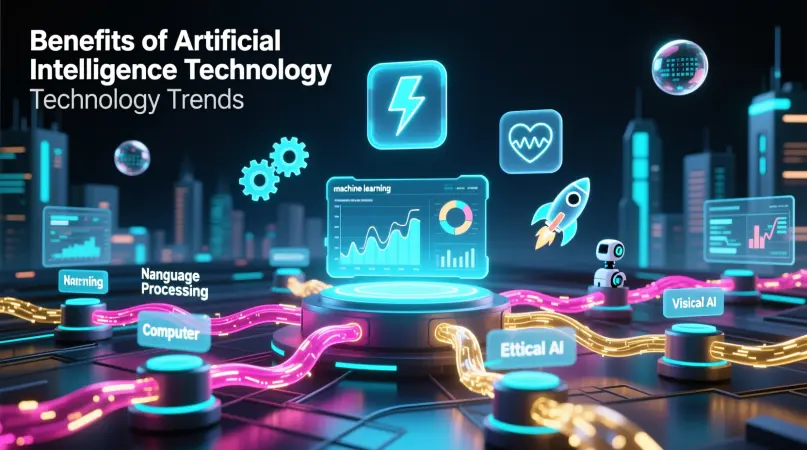
- Improves efficiency by automating repetitive tasks
- Enhances decision-making using data-driven insights
- Reduces human error in complex processes
- Saves time and operational costs
- Enables personalized user experiences
- Supports innovation across industries
- Improves customer service through smart systems
Disadvantages / Risks
- High initial development and setup costs
- Risk of data privacy and security issues
- Potential job displacement in some sectors
- Dependence on data quality and availability
- Ethical concerns related to bias and fairness
- Complexity in understanding AI decisions
Common Mistakes to Avoid
One common mistake is expecting instant results. Artificial intelligence technology trends require time, testing, and improvement.
Another mistake is using poor-quality data. Bad data leads to inaccurate outcomes, no matter how advanced the system is.
Ignoring ethical considerations is also risky. AI systems must be fair, transparent, and responsible.
Some organizations also fail by not training their teams properly. Human understanding is essential to manage AI tools effectively.
Lastly, avoiding regular updates can make AI systems outdated and insecure.
FAQs
What are artificial intelligence technology trends in simple terms?
Artificial intelligence technology trends describe how AI tools are evolving and being used in real life. They show new ways machines learn and solve problems.
Are artificial intelligence technology trends only for big companies?
No, small businesses and individuals also benefit. Many affordable AI tools are now available for daily use.
Do I need technical skills to understand AI trends?
Basic understanding is enough. Technical skills help, but beginners can learn concepts without coding.
How do artificial intelligence technology trends affect jobs?
Some jobs change, but many new roles are created in AI development, management, and analysis.
Is artificial intelligence safe to use?
When developed responsibly, AI is safe. Security, ethics, and transparency are key factors.
How often do AI trends change?
Artificial intelligence technology trends evolve quickly, often every year, as technology improves and new research emerges.
Expert Tips & Bonus Points
Focus on learning fundamentals before advanced topics. Understanding data, algorithms, and ethics builds a strong foundation.
Stay updated with industry changes and practical use cases. Real-world examples improve understanding.
Start small by using AI-powered tools before building complex systems.
Always prioritize data security and user privacy.
Collaboration between humans and AI produces the best results.
Conclusion
Artificial Intelligence technology trends are transforming the world in powerful and practical ways. What once seemed like science fiction is now part of everyday life. From improving business efficiency to enhancing personal experiences, AI continues to grow rapidly.
Understanding artificial intelligence technology trends helps beginners and intermediate learners stay informed and prepared. These trends are not just about machines replacing humans. They focus on supporting human decision-making and solving complex problems faster.
As AI technology advances, responsible use becomes more important. Ethical design, quality data, and continuous learning ensure long-term success. Those who understand and adapt to these trends will have a strong advantage in the digital future.