
Introduction
Technology is changing the world faster than ever before. Two terms you hear almost every day are machine learning vs artificial intelligence. Many people use these words as if they mean the same thing, but they are not exactly alike. Understanding the difference can feel confusing, especially for beginners. However, once explained in simple language, the topic becomes much clearer.
Machine Learning vs Artificial Intelligence is an important comparison because both are shaping how we work, learn, and live. From smartphones and online shopping to healthcare and finance, these technologies influence daily decisions. Beginners often think artificial intelligence is a robot that thinks like a human. Others believe machine learning is just coding with data. In reality, the truth is more interesting and practical.
This article is written to help beginners and intermediate readers understand machine learning vs artificial intelligence without technical stress. You will learn what each term means, how they are connected, and where they are used in real life. We will also explore benefits, risks, common mistakes, and expert tips to help you build a strong foundation.
What is Machine Learning vs Artificial Intelligence?
To understand machine learning vs artificial intelligence, we must first define artificial intelligence. Artificial intelligence, often called AI, is a broad concept. It refers to machines designed to perform tasks that usually require human intelligence. These tasks include thinking, reasoning, problem-solving, understanding language, and decision-making.
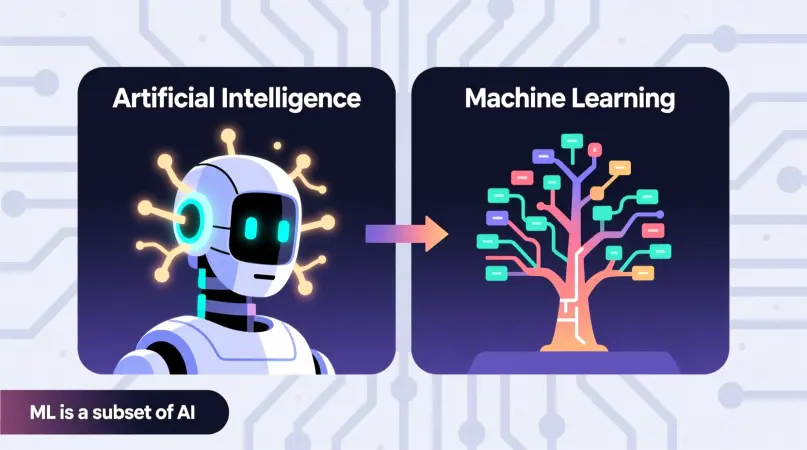
Machine learning is a subset of artificial intelligence. It focuses on teaching machines how to learn from data without being directly programmed for every task. Instead of following fixed rules, machine learning systems improve their performance by analyzing patterns in data.
In simple words, artificial intelligence is the big idea, while machine learning is one way to achieve it. AI can exist without machine learning, but most modern AI systems rely on machine learning to function effectively.
For example, a basic AI system might follow strict rules to play chess. A machine learning system, however, learns from thousands of games and improves over time. This difference highlights why machine learning vs artificial intelligence is not a competition but a relationship.
Understanding this connection helps remove confusion. Artificial intelligence sets the goal of making machines intelligent. Machine learning provides the tools to reach that goal using data and experience.
Why is Machine Learning vs Artificial Intelligence Important?
The comparison of machine learning vs artificial intelligence is important because it affects how technology is built and used. Businesses, governments, and individuals rely on these technologies to solve complex problems more efficiently.
One key reason this topic matters is career planning. Many learners want to enter the tech industry but are unsure where to start. Knowing the difference between machine learning vs artificial intelligence helps you choose the right learning path.
Another reason is decision-making. Companies invest heavily in AI solutions. Understanding whether a problem needs rule-based AI or data-driven machine learning saves time and money. Not every problem requires machine learning, and not every AI system needs deep intelligence.
This topic also matters for ethics and responsibility. Artificial intelligence systems influence hiring, lending, and healthcare decisions. Knowing how machine learning models work helps people question results and avoid blind trust in technology.
Finally, machine learning vs artificial intelligence is important because it shapes the future. Automation, smart assistants, and predictive systems are becoming normal. Understanding these concepts empowers users rather than leaving them confused or dependent.
Detailed Step-by-Step Guide
Step 1: Understand the Core Concept
Start by understanding that artificial intelligence is the overall goal. It aims to create systems that behave intelligently. Machine learning is one method used to achieve this goal through data and algorithms.
This mindset makes learning easier and prevents confusion later.
Step 2: Learn How Artificial Intelligence Works
Artificial intelligence can be rule-based or learning-based. Rule-based AI follows instructions written by humans. Learning-based AI uses data to improve decisions.
Examples include:
- Rule-based chatbots
- Expert systems
- Automated scheduling tools
These systems do not always learn, but they still show intelligent behavior.
Step 3: Learn How Machine Learning Works
Machine learning focuses on data. It uses algorithms to find patterns and make predictions. The system improves as it receives more data.
Common machine learning types include:
- Supervised learning
- Unsupervised learning
- Reinforcement learning
Each type solves different problems using data-driven methods.
Step 4: Compare Real-Life Examples
A spam email filter is a good example of machine learning. It learns from emails marked as spam. A voice assistant uses artificial intelligence, which may include machine learning, speech recognition, and rule-based logic.
These examples show how machine learning vs artificial intelligence works together.
Step 5: Identify Use Cases
Artificial intelligence is used in robotics, planning, and automation. Machine learning is used in prediction, recommendation systems, and image recognition.
Understanding use cases helps you choose the right approach.
Step 6: Choose What to Learn First
Beginners often start with machine learning because it has clear learning paths. Artificial intelligence includes many fields, making it broader and more complex.
Learning machine learning first builds a strong base for understanding artificial intelligence.
Benefits of Machine Learning vs Artificial Intelligence
- Improves efficiency and productivity
- Reduces human error in decision-making
- Handles large amounts of data quickly
- Learns and improves over time
- Supports innovation across industries
- Enhances customer experience
- Enables smarter automation
These benefits show why machine learning vs artificial intelligence is transforming modern life.
Disadvantages / Risks
- High development and maintenance costs
- Risk of biased data and unfair decisions
- Lack of transparency in complex models
- Job displacement concerns
- Data privacy and security issues
- Dependence on quality data
Understanding these risks helps users apply these technologies responsibly.
Common Mistakes to Avoid
One common mistake is using machine learning when simple rules are enough. Not every problem needs complex models.
Another mistake is assuming artificial intelligence always learns on its own. Many AI systems require human input and monitoring.
Ignoring data quality is also a serious error. Poor data leads to poor results, especially in machine learning.
Finally, beginners often try to learn everything at once. Focusing on fundamentals first leads to better long-term understanding.
FAQs
What is the main difference between machine learning vs artificial intelligence?
Artificial intelligence is the broader concept of creating intelligent machines. Machine learning is a method within AI that allows systems to learn from data.
Is machine learning always part of artificial intelligence?
Machine learning is usually part of modern AI systems, but artificial intelligence can exist without machine learning through rule-based systems.
Which is better to learn first for beginners?
Most beginners start with machine learning because it has structured learning paths and practical applications.
Can artificial intelligence work without data?
Some AI systems work with predefined rules and do not require large datasets. Machine learning, however, depends heavily on data.
Are machine learning and artificial intelligence replacing human jobs?
They automate certain tasks but also create new roles. The focus is shifting toward collaboration between humans and machines.
Is coding required to learn machine learning vs artificial intelligence?
Basic coding skills are helpful, especially for machine learning. However, conceptual understanding can be learned without deep programming at first.
Expert Tips & Bonus Points
Start with simple concepts before moving to advanced topics. Build a strong foundation in data and logic.
Practice with real-world examples to understand how theories apply in practice.
Always question results produced by intelligent systems. Human oversight remains important.
Focus on ethical use and responsible design. Technology should support fairness and transparency.
Stay updated with trends, but avoid hype. Not every new tool is necessary or useful.
Conclusion
Understanding machine learning vs artificial intelligence is essential in today’s digital world. While the terms are often used together, they represent different ideas that work closely with each other. Artificial intelligence is the broad vision of creating intelligent systems, while machine learning is a practical approach that allows machines to learn from data.
This guide explained the topic in simple language, making it accessible for beginners and useful for intermediate readers. You learned definitions, importance, step-by-step concepts, benefits, risks, and common mistakes. You also explored real-world examples that show how these technologies impact everyday life.